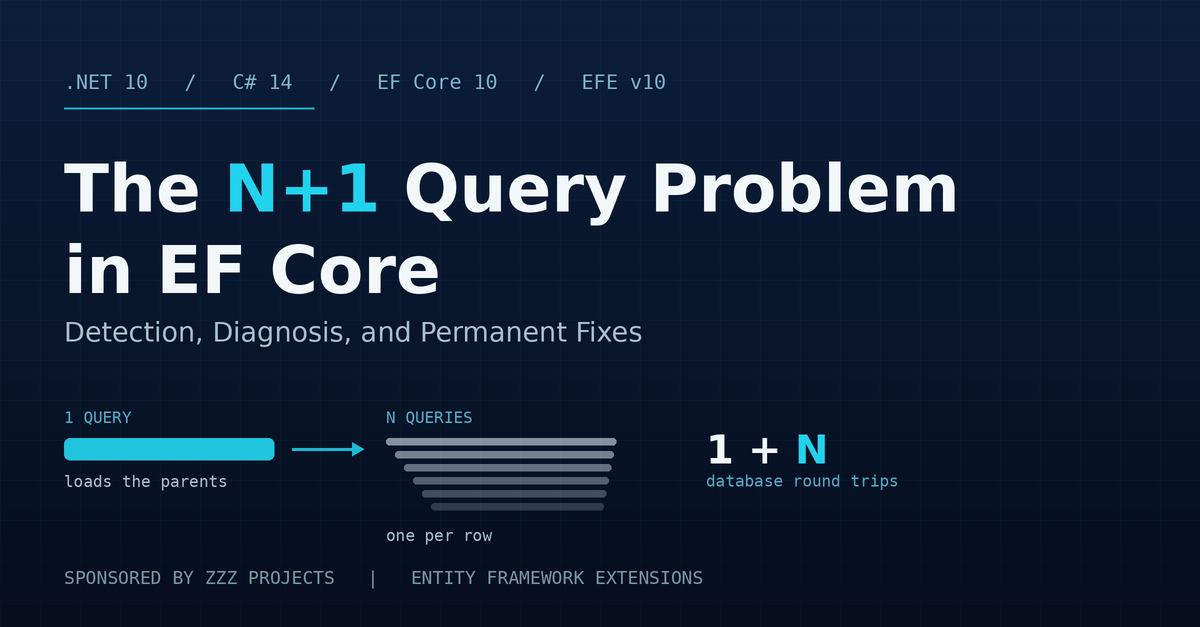
The N+1 Query Problem in EF Core: Detection, Diagnosis, and Permanent Fixes
An order summary page renders in 40 milliseconds against your development database. The same page takes eleven seconds in production. You open the profiler, and the controller method looks clean. You reread the LINQ, and it reads correctly. You check the indexes, and every column you need is covered. The code passed review. The tests are green. And the page …
Continue Reading
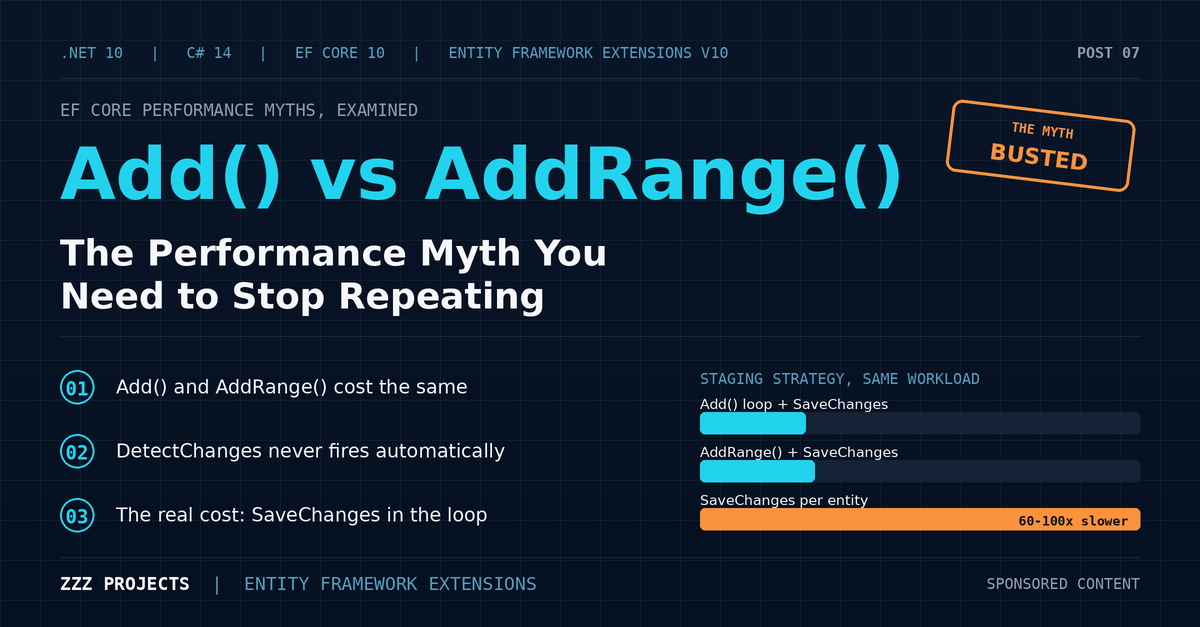
Add vs AddRange in EF Core: The Performance Myth You Need to Stop Repeating
Somebody told you never to call Add() in a loop. Maybe it was a senior developer during code review. Maybe it was a Stack Overflow answer with four hundred upvotes. Maybe it was a blog post that ranks on page one for “improve entity framework performance.” The advice sounded authoritative: Add() forces a DetectChanges scan on every call, and that …
Continue Reading
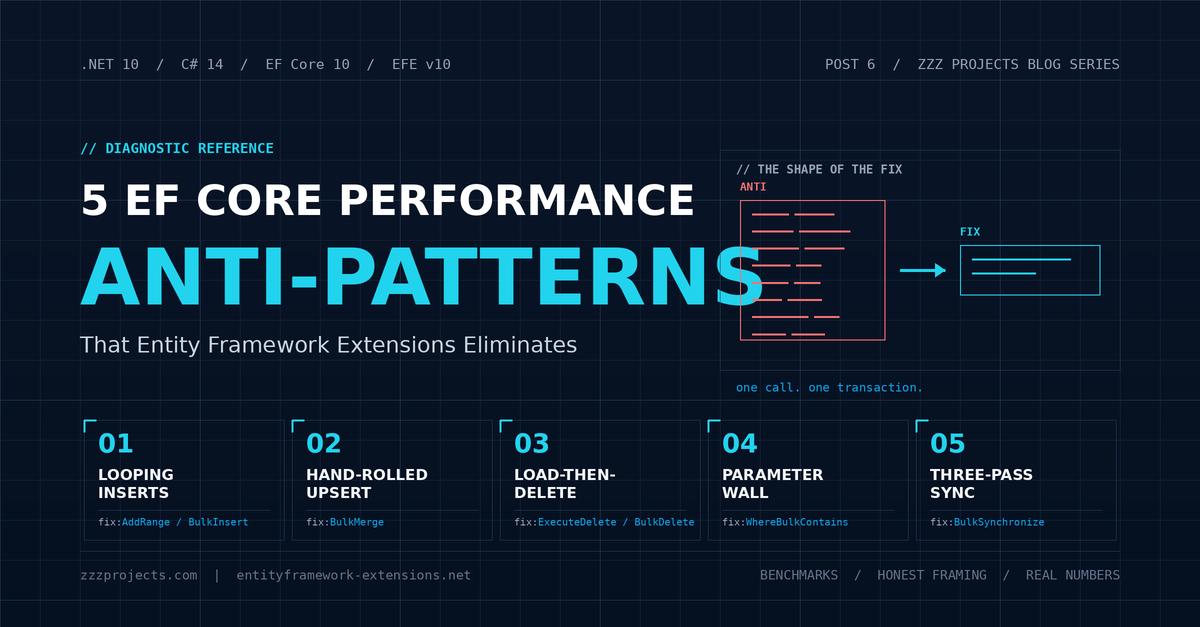
5 EF Core Performance Anti-Patterns That Entity Framework Extensions Eliminates
The Code You Already Wrote Every .NET team has at least one of these in production. It looked fine in review. It passed unit tests. It worked in staging against the seed data. Then real traffic hit, and now somebody is on call at three in the morning trying to work out why the nightly job has been running for …
Continue Reading
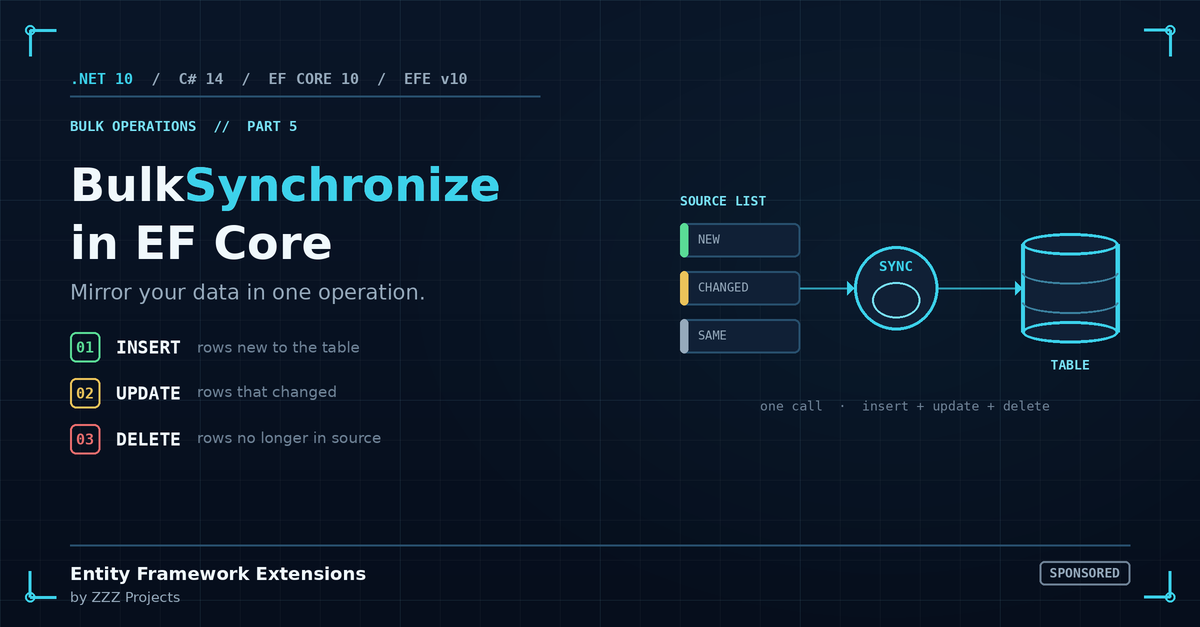
BulkSynchronize in EF Core: Mirror Your Data in One Operation
The Function Everyone Has Written, Nobody Loves If your codebase has a method called something like SyncProducts(), RefreshMetrics(), or UpdateFromFeed(), it probably looks something like this: It looks fine in code review. It passes the unit tests. It scales like a wet match. Three things go wrong as data volume grows. Loading the existing rows pulls everything into the change …
Continue Reading
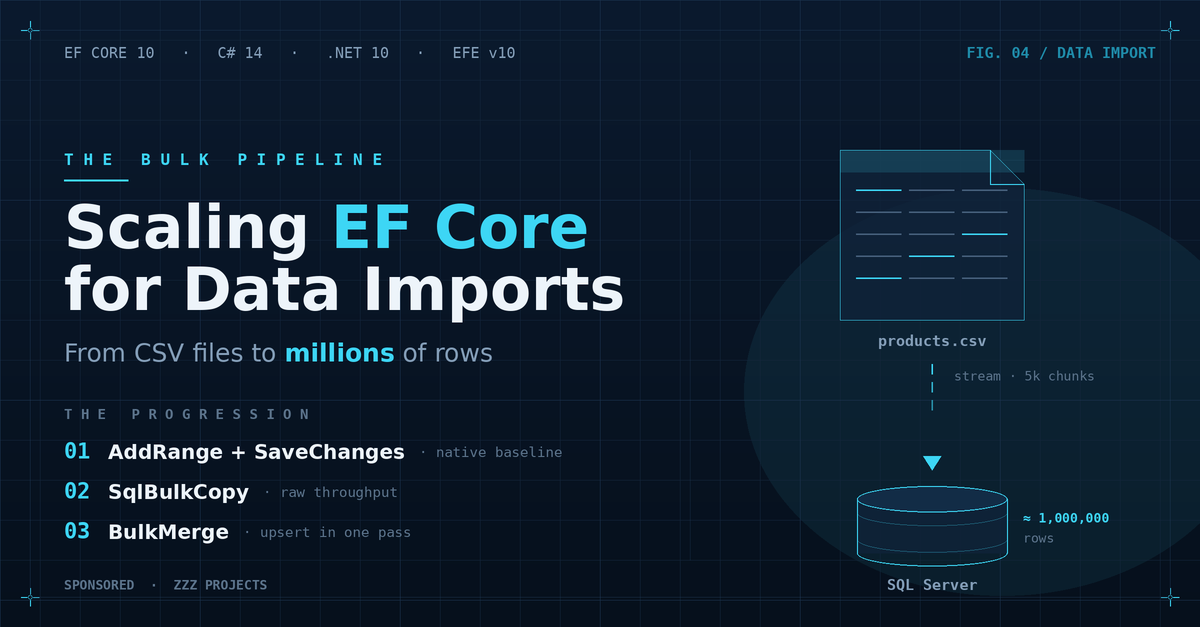
Scaling EF Core for Data Imports: From CSV Files to Millions of Database Rows
The Import Job Nobody Wants to Own Every team has one. It might be called an import service, a feed processor, or a sync job. The name varies. What stays constant is the shape of the problem: a large file arrives on schedule, and someone needs to get its contents into a database accurately, quickly, and without duplicating data already …
Continue Reading
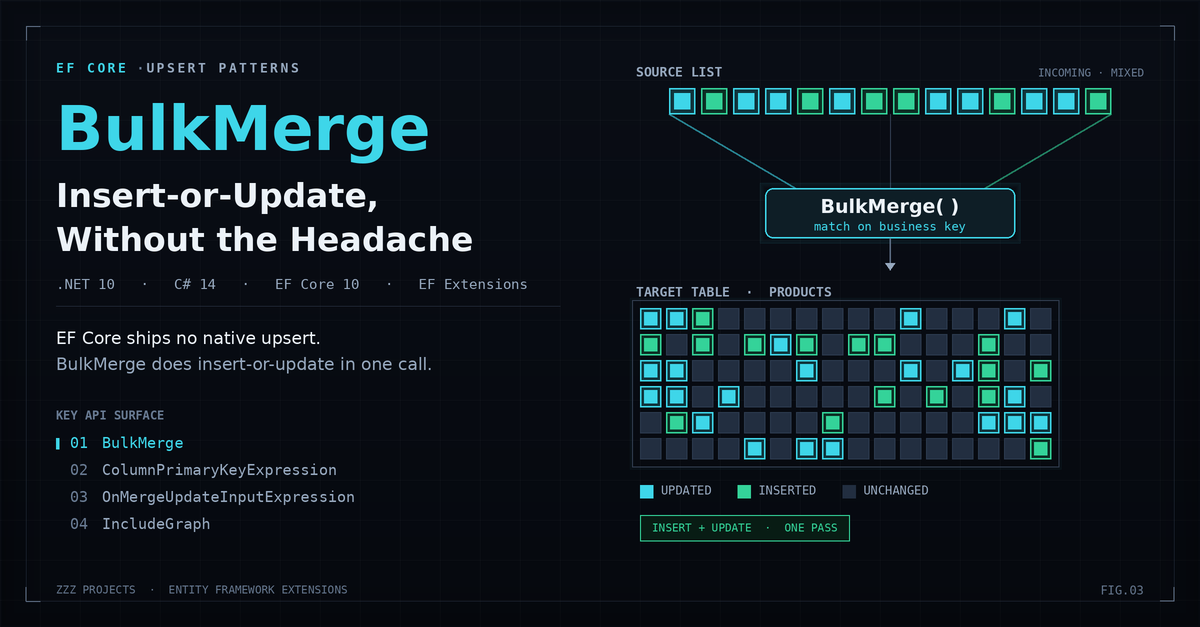
BulkMerge (Upsert) in EF Core: How to Insert-or-Update Without the Headache
Picture this. Your inbox lights up at 7:14 AM. A supplier just pushed 50,000 product records to your endpoint. Half are new. The other half are updates to products already sitting in your database. You have no idea which is which. The feed does not tell you. The records do not carry your internal primary keys. And the import job …
Continue Reading
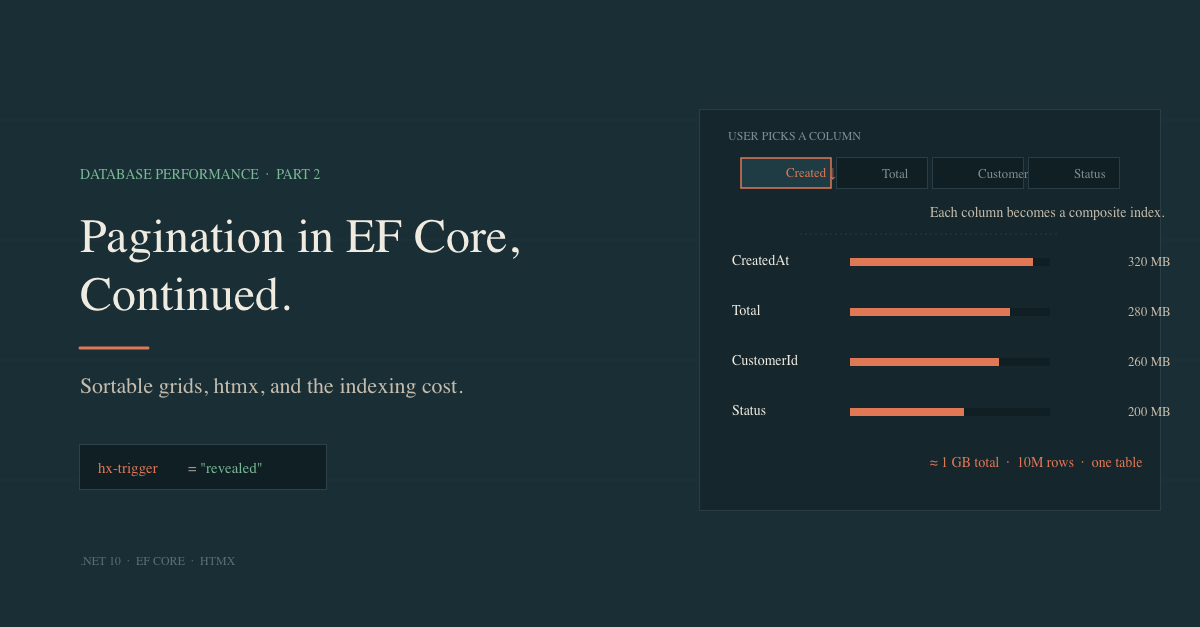
Pagination in EF Core, Continued: Sortable Grids, htmx, and the Indexing Cost
The first post in this series made a clean case for keyset pagination over Skip/Take. Readers on LinkedIn pushed back with a fair question I’d dodged: what about sortable grids where the user picks the column? The post showed ORDER BY Id, which is the easy case. Real apps have grids with eight clickable column headers and a “sort direction” …
Continue Reading
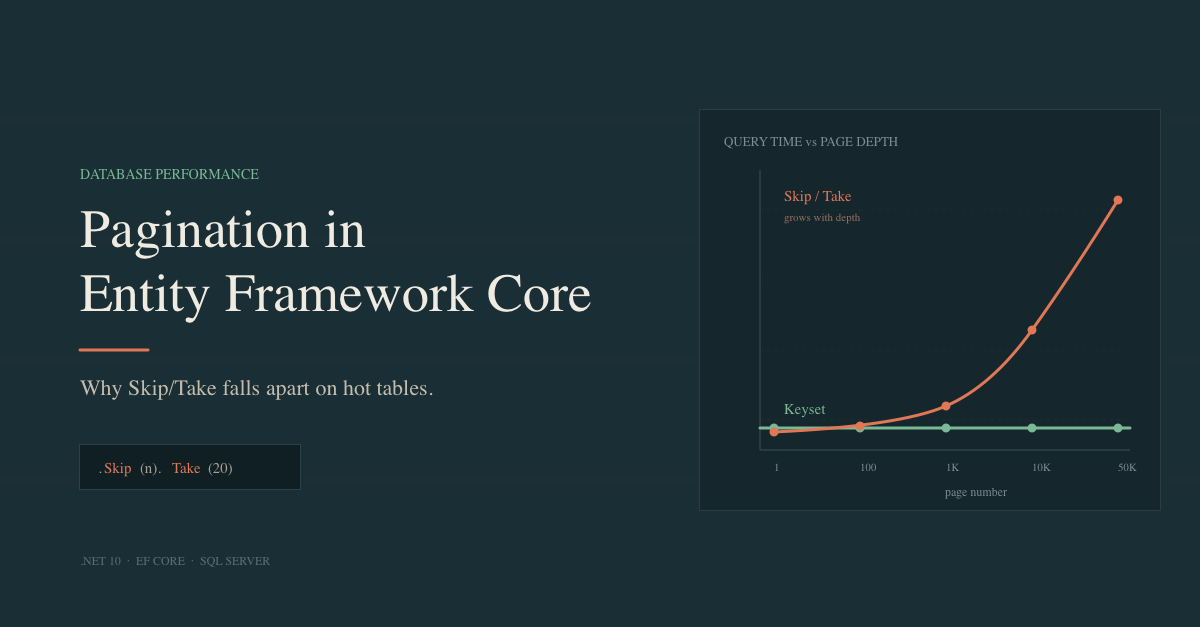
Pagination in Entity Framework Core: Why Skip/Take Falls Apart on Hot Tables
If you’ve built an ASP.NET Core API or list view backed by Entity Framework Core, you’ve almost certainly written something like this: It works. It matches the page-number UI most users expect. Every EF Core tutorial uses it. It’s also the wrong default once your table grows beyond a few hundred thousand rows or begins seeing concurrent writes. This post …
Continue Reading
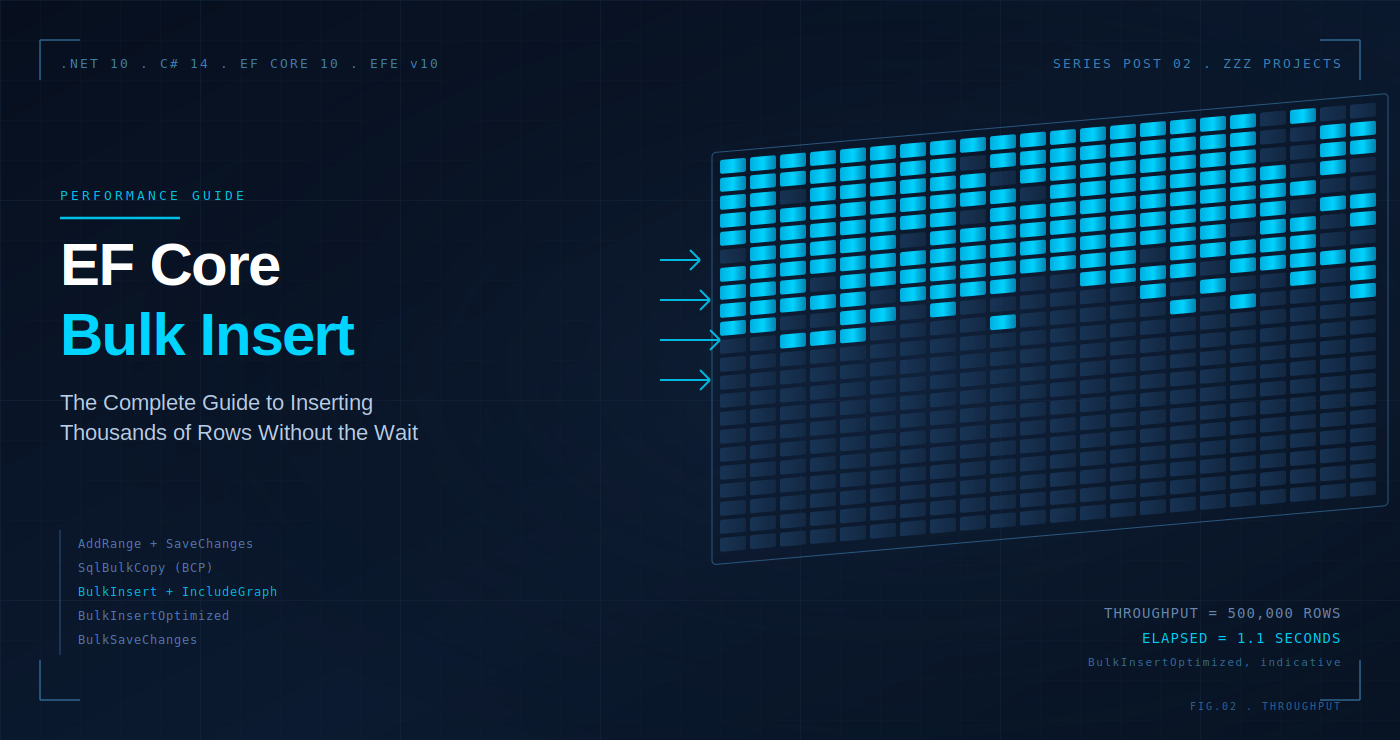
EF Core Bulk Insert: The Complete Guide to Inserting Thousands of Rows Without the Wait
This post is sponsored by ZZZ Projects. You have written this loop. Every .NET developer has. It looks fine in a code review. It passes unit tests. It works against your local database with 200 sample rows in twelve milliseconds. Then production calls. The nightly import runs against 300,000 product records. By 3am your monitoring dashboard turns red, your DBA …
Continue Reading
Debugging Entity Framework Core: 8 Real-World Query Anti‑Patterns (and How to Fix Them)
This is my post for the 2025 C# Advent. Check out all the great posts! I want to wish you a Merry Christmas, Happy Holidays, Happy Hanukkah, Happy Kwanzaa, and, finally, Happy Festivus. I will not be sharing my “Airing of grievances” or challenge anyone to a “Feats of strength.” Entity Framework Core is an excellent library for CRUD operations against …
Continue Reading