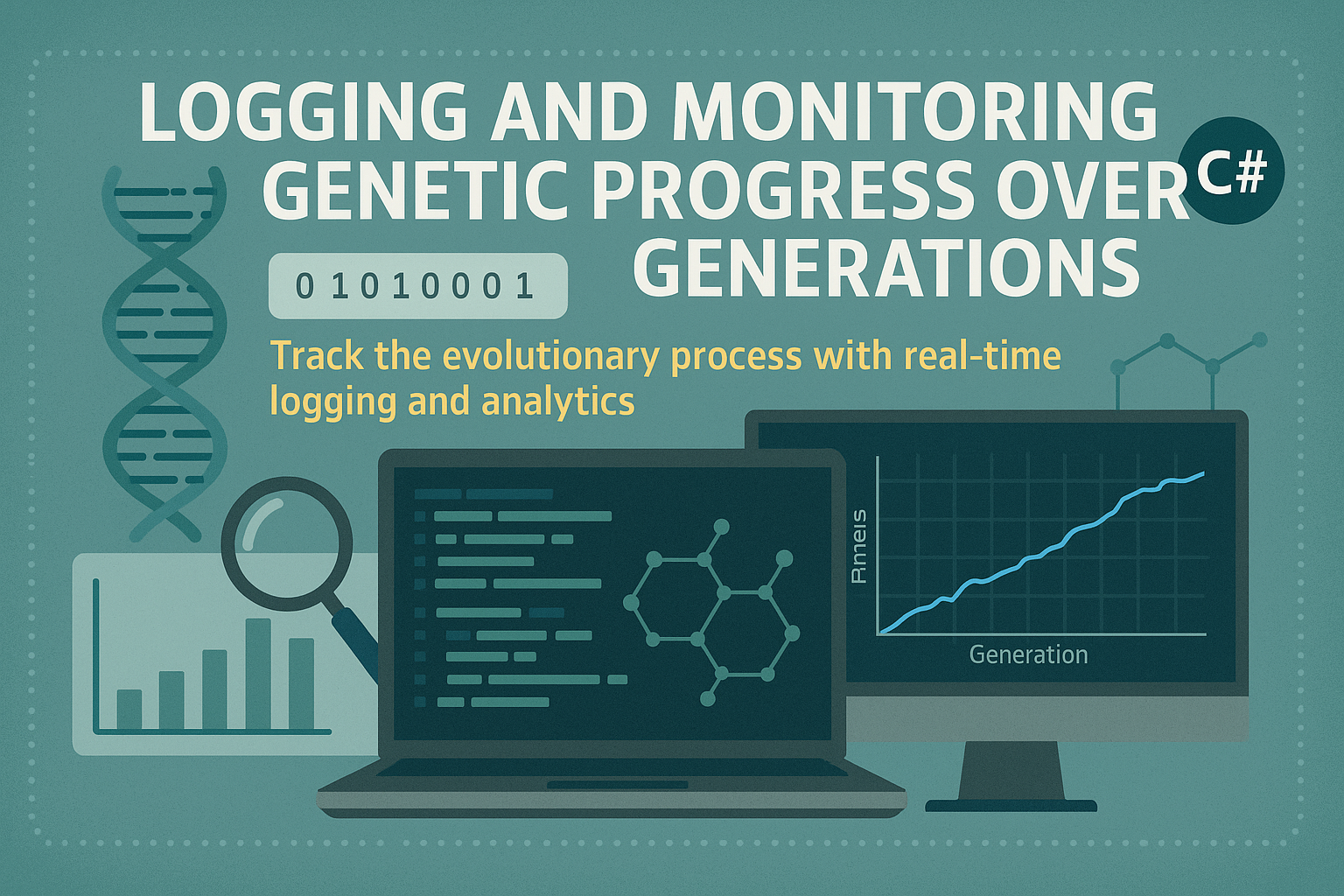
Day 27: Logging and Monitoring Genetic Algorthms Progress Over Generations
As your genetic algorithms become more sophisticated, it’s no longer enough to simply observe the final output. Monitoring the evolutionary process in real time provides critical insight into convergence behavior, mutation impacts, and solution quality. Logging and monitoring allow you to diagnose performance bottlenecks, identify premature convergence, and validate the impact of parameter changes.
Continue Reading
Day 26: Running Genetic Algorthms in the Cloud with Azure Batch or Functions
As your genetic algorithm workloads grow in complexity, compute-intensive tasks like evaluating large populations or running many generations can exceed what a single machine can handle efficiently. To address this, cloud platforms such as Microsoft Azure offer scalable execution environments where GAs can be deployed and run in parallel. Azure Batch and Azure Functions are two effective approaches to execute genetic algorithms at scale, each suited to different execution patterns.
Continue Reading
Day 25: Scaling Up: Parallelizing Genetic Algorithms Loops in .NET with Parallel.ForEach
As problem complexity grows, so does the cost of evaluating and evolving populations in genetic algorithms. When each individual’s fitness computation becomes expensive or the population size increases substantially, runtime performance can become a serious bottleneck. Fortunately, .NET makes it easy to scale genetic algorithms with minimal code changes by using Parallel.ForEach.
Continue Reading
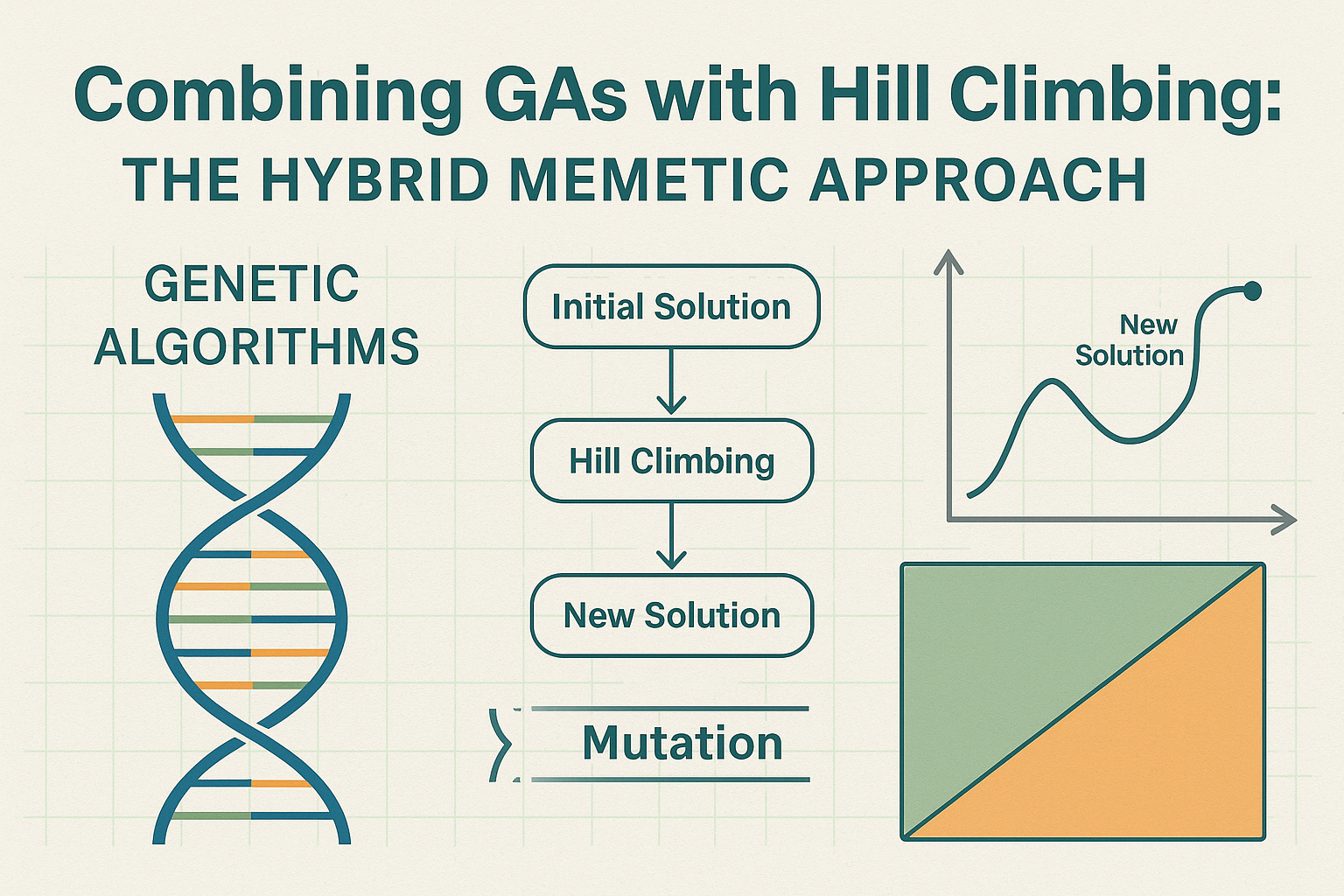
Day 24: Combining Genetic Algorithms with Hill Climbing: The Hybrid Memetic Approach
Traditional genetic algorithms (GAs) excel at global exploration across large search spaces. However, they can struggle to fine-tune solutions with high precision due to their stochastic nature. On the other hand, local search techniques like hill climbing are good at refining individual solutions but easily get trapped in local optima. A memetic algorithm combines both approaches, using GAs for exploration and local search for exploitation. This hybrid strategy has proven effective in complex optimization problems where both breadth and depth of search are required.
Continue Reading
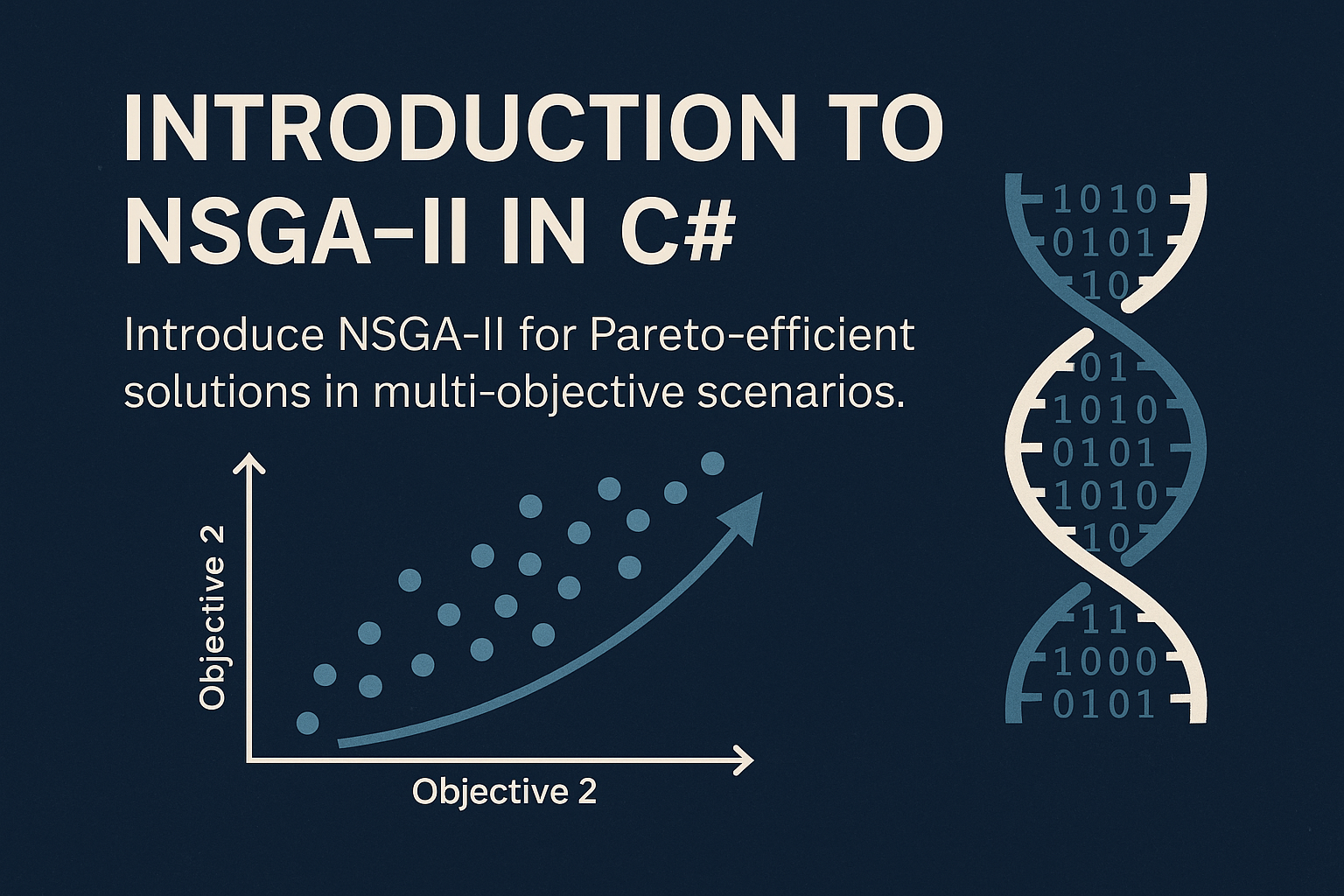
Day 23: Introduction to Non-dominated Sorting Genetic Algorithm II (NSGA-II) in C#
As we extend our use of genetic algorithms (GAs) beyond single-objective problems, we enter the realm of multi-objective optimization, where trade-offs must be made between competing goals. The Non-dominated Sorting Genetic Algorithm II (NSGA-II) is one of the most widely used algorithms for solving such problems. Its design maintains a diverse population of high-quality solutions that form what is known as a Pareto front.
Continue Reading
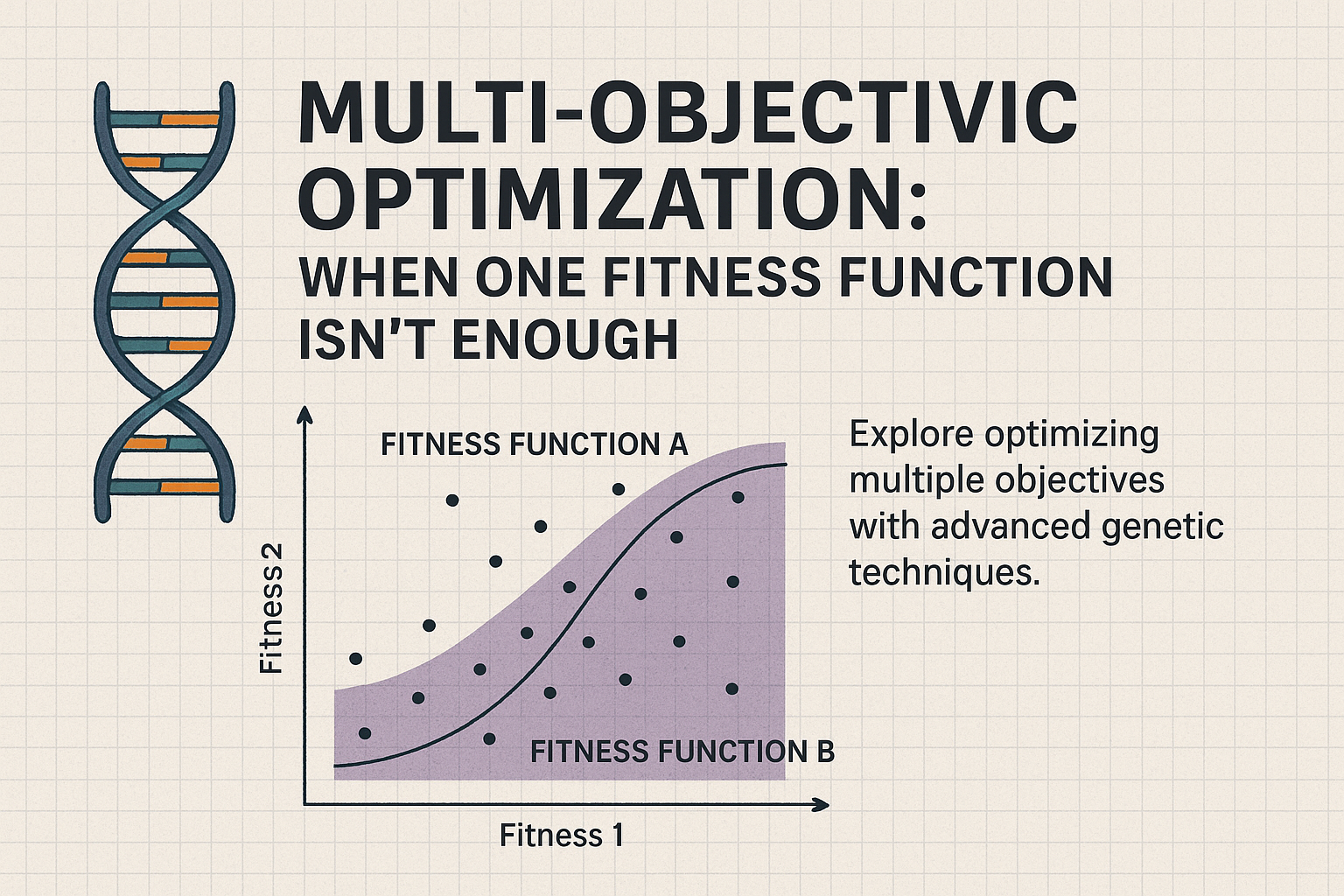
Day 22: Multi-Objective Optimization: When One Fitness Function Isn’t Enough
In many real-world problems, a single fitness function is insufficient to capture the complexity of the solution space. Applications in engineering, logistics, finance, and machine learning often involve trade-offs among competing objectives. For example, minimizing cost while maximizing performance, or reducing power consumption without sacrificing accuracy. In these cases, genetic algorithms (GAs) can be extended to support multi-objective optimization.
Continue Reading
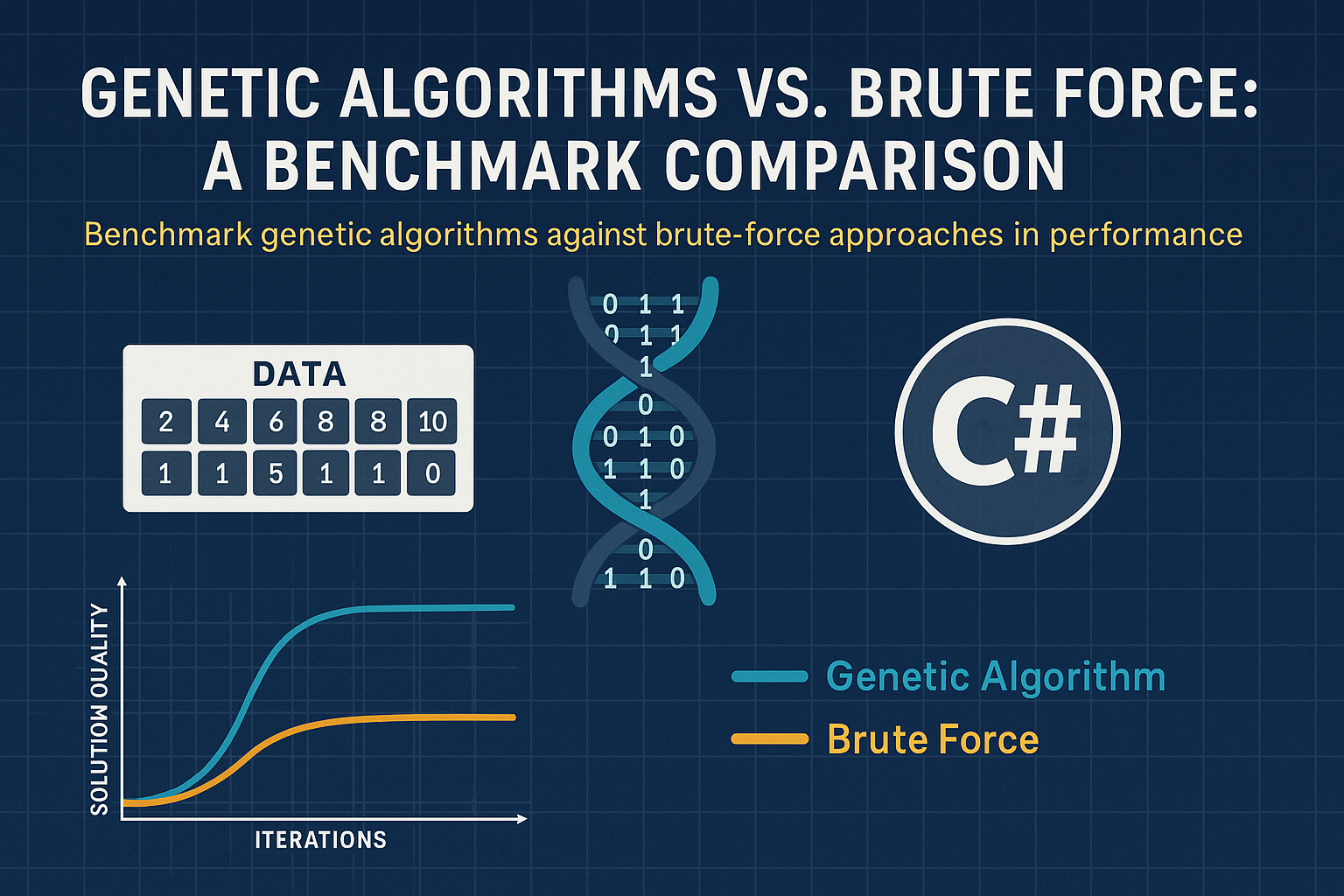
Day 21: Genetic Algorithms vs. Brute Force: A Benchmark Comparison
To conclude Week 3, let’s address one of the most common questions developers ask when learning about genetic algorithms: How do they perform compared to brute-force solutions? This is especially relevant when working on combinatorial problems, such as the Traveling Salesperson Problem (TSP) or scheduling tasks. Genetic algorithms promise that they offer reasonable solutions in a fraction of the time it takes brute-force methods to find optimal ones. But how does this actually play out?
Today, we’ll benchmark a simple scenario using both approaches and compare execution time and solution quality. We’ll use the TSP with 8 cities as our problem space. This size is large enough to make brute-force non-trivial, but still solvable within a reasonable time.
Continue Reading
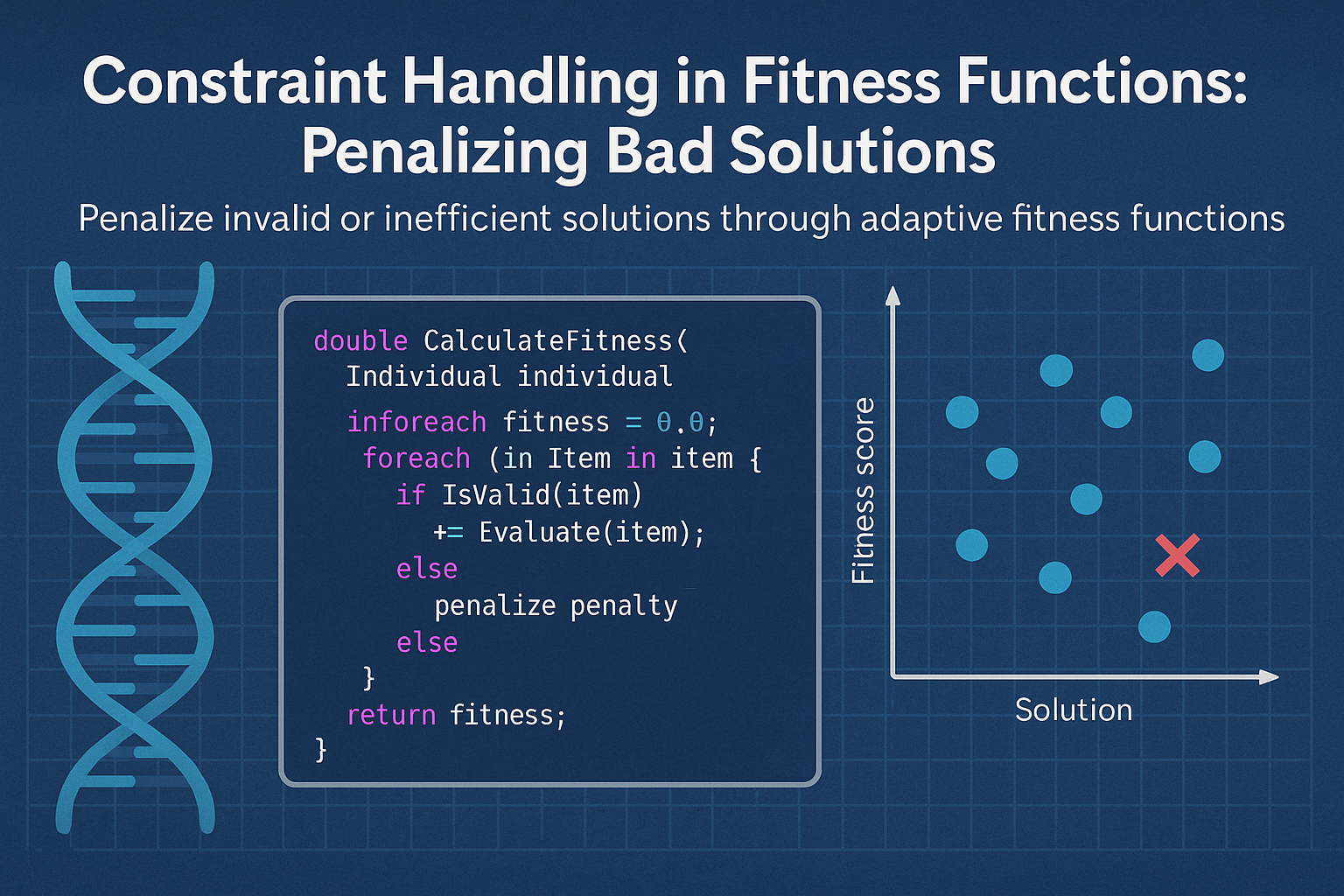
Day 20: Constraint Handling in Fitness Functions: Penalizing Bad Solutions
Genetic algorithms are powerful optimization tools, but real-world problems often involve constraints that cannot be ignored. In scheduling, routing, resource allocation, and layout optimization, constraints like resource limits, timing conflicts, and exclusivity rules define what makes a solution valid. Without a mechanism to enforce or guide adherence to these rules, a genetic algorithm may evolve highly fit but completely infeasible solutions.
One effective way to handle this is by integrating constraint penalties directly into the fitness function. By penalizing violations, we make sure that invalid solutions are less likely to survive and propagate in future generations. This method requires designing fitness functions that are both accurate evaluators and adaptive enforcers of your problem’s rules.
Continue Reading
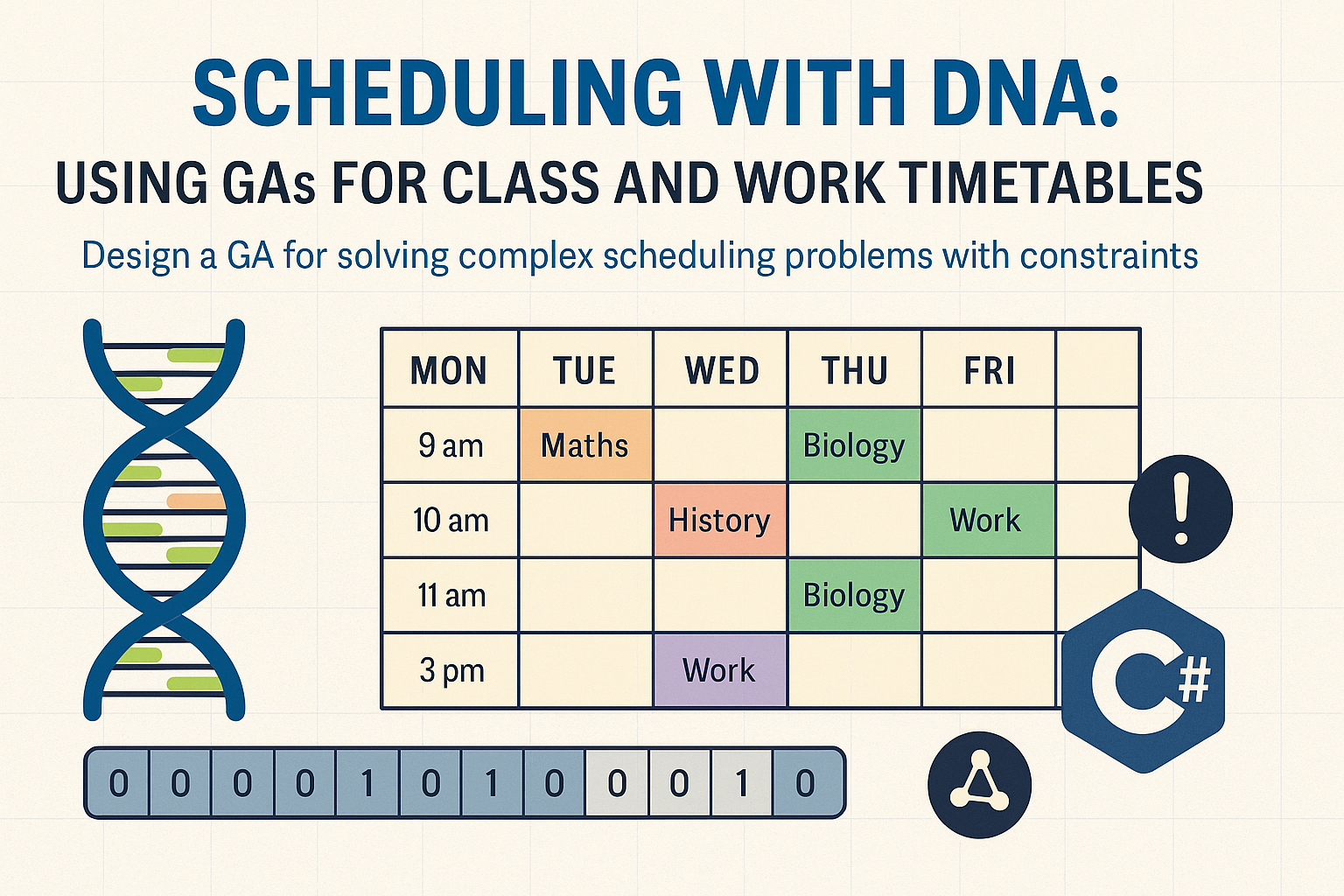
Day 19: Scheduling with DNA: Using Genetic Algorthms for Class and Work Timetables
Scheduling is a classic example of a constraint satisfaction problem that often becomes too complex for brute-force or greedy solutions. Whether you’re designing class timetables for a university or shift schedules for employees, the number of constraints quickly increases, making traditional methods inefficient. Genetic Algorithms provide a flexible and powerful approach to finding feasible and optimized schedules by evolving solutions that balance multiple constraints over time.
In a scheduling problem, the chromosome represents a potential timetable. Each gene can represent a time-slot assignment for a course, instructor, room, or shift. Unlike simple optimization problems, scheduling must respect both hard constraints (such as no double-booking of rooms or overlapping classes for a teacher) and soft constraints (such as preferring certain time blocks).
Continue Reading
Day 18: Mapping Cities: Visualizing TSP Evolution in .NET
One of the most effective ways to understand the progress of a genetic algorithm is to visualize its evolution. When solving the Traveling Salesperson Problem, a well-designed visualization can clearly show how random routes evolve into efficient paths over time. In .NET, we can use simple drawing libraries like System.Drawing to generate visual output during the evolution process.
Today, we will walk through how to integrate a visual component into your genetic algorithm for TSP using permutation chromosomes. You will generate images that show the route taken by the best chromosome of each generation, allowing you to see improvement over time.
Continue Reading